

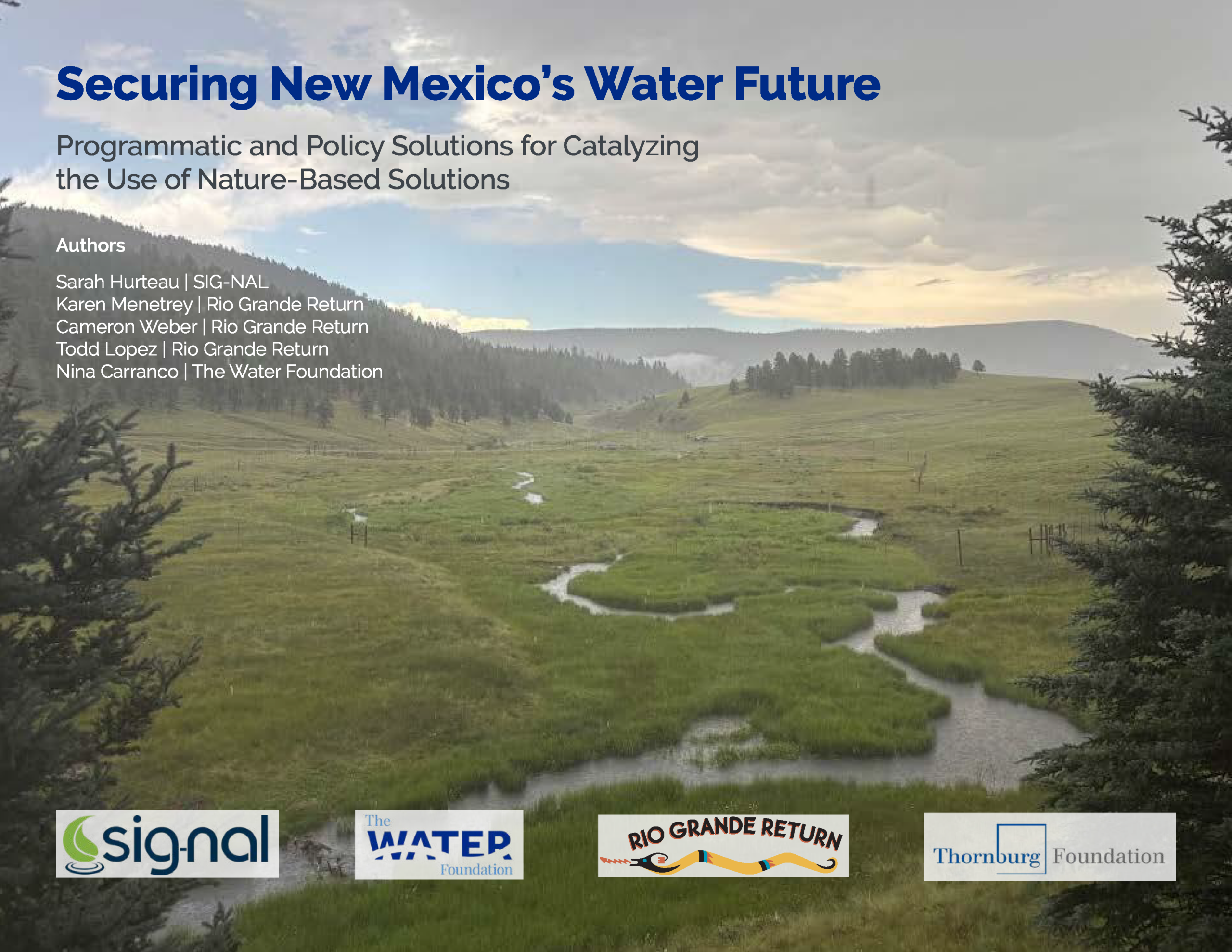
Securing New Mexico's Water Future Through Nature-Based Solutions.
As New Mexico faces a rise in natural disasters, a new report details how nature-based solutions can provide public safety, economic and environmental benefits to communities across the state.
Authored by Rio Grande Return and Spatial Informatics Group–Natural Assets Laboratory (SIG-NAL) with support from the Water Foundation, the report makes several recommendations to help state agencies, policymakers, community organizations and contractors build on the work they are already doing to expand nature-based solutions.
Down and read the report here
This includes deploying low-cost, low-tech practices like building Zuni bowls and one-rock dams, regenerative farming using healthy soil principles, green stormwater infrastructure, forest thinning, playa lakes restoration and other approaches that go beyond traditional infrastructure to protect New Mexico’s natural environment.
The report evaluated more than 50 programs across 14 state agencies and four non-state organizations, and included interviews with agency leadership, program managers, technical experts, and community partners.
It found that New Mexico should draw from its traditional knowledge and cutting edge science to better recognize nature-based solutions as a proactive strategy to tackle the increase in natural disasters.
Specifically, the report recommends policymakers provide more legal clarity in state statutes and programs, develop a shared vocabulary and consistent terminology, update grant requests and building codes, and address capacity gaps to support more workforce development and job training.
The key takeaway: New Mexico has the people, programs and practices ready to accelerate a government-wide embrace of nature-based solutions.
By supporting nature-based solutions, we can conserve land for farmers and ranchers, protect water supplies, restore our natural environment, create jobs, grow rural economies, and better protect communities from natural disasters.
Authored by Rio Grande Return and Spatial Informatics Group–Natural Assets Laboratory (SIG-NAL) with support from the Water Foundation, the report makes several recommendations to help state agencies, policymakers, community organizations and contractors build on the work they are already doing to expand nature-based solutions.
Down and read the report here
This includes deploying low-cost, low-tech practices like building Zuni bowls and one-rock dams, regenerative farming using healthy soil principles, green stormwater infrastructure, forest thinning, playa lakes restoration and other approaches that go beyond traditional infrastructure to protect New Mexico’s natural environment.
The report evaluated more than 50 programs across 14 state agencies and four non-state organizations, and included interviews with agency leadership, program managers, technical experts, and community partners.
It found that New Mexico should draw from its traditional knowledge and cutting edge science to better recognize nature-based solutions as a proactive strategy to tackle the increase in natural disasters.
Specifically, the report recommends policymakers provide more legal clarity in state statutes and programs, develop a shared vocabulary and consistent terminology, update grant requests and building codes, and address capacity gaps to support more workforce development and job training.
The key takeaway: New Mexico has the people, programs and practices ready to accelerate a government-wide embrace of nature-based solutions.
By supporting nature-based solutions, we can conserve land for farmers and ranchers, protect water supplies, restore our natural environment, create jobs, grow rural economies, and better protect communities from natural disasters.
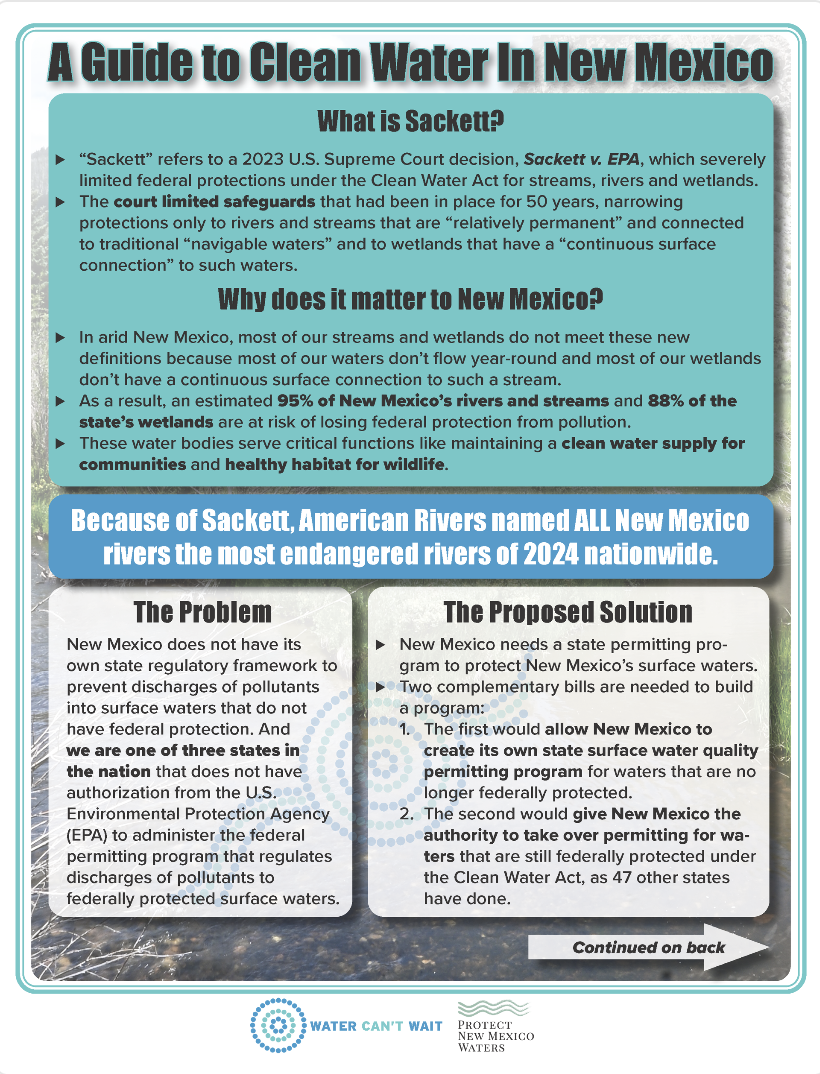
A Guide to Clean Water in New Mexico
Full Report
New Mexico State Water Plan 5-Year Review (2023)
Full Report
50 Year Water Action Plan.
View Plan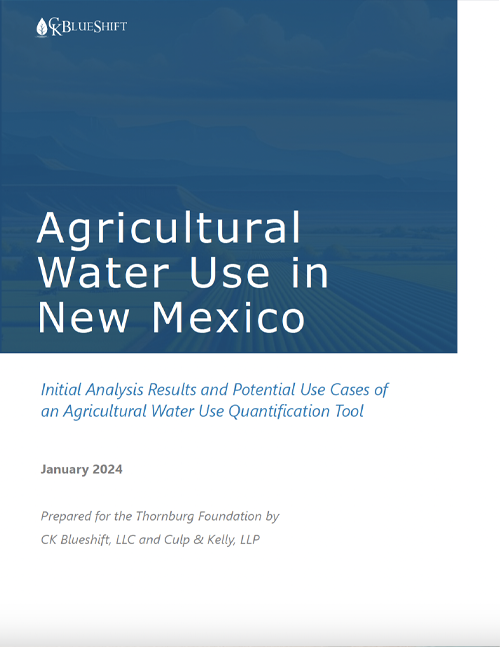
Agriculture water use in New Mexico: opportunities to support climate resilient agriculture.
Full Report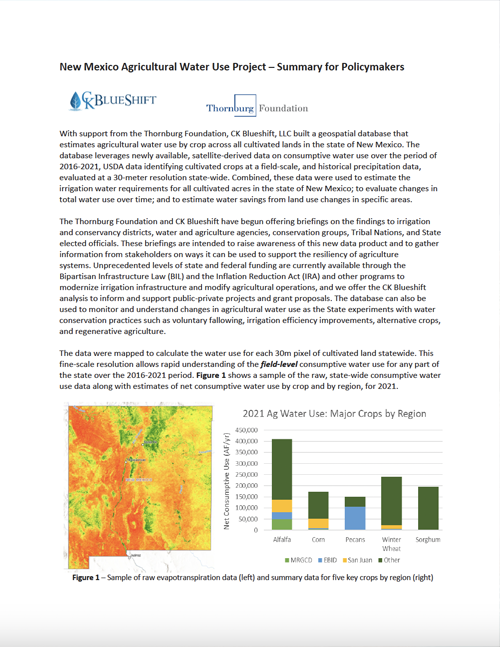
Agriculture water use in New Mexico: opportunities to support climate resilient agriculture (summary for policymakers).
View Summary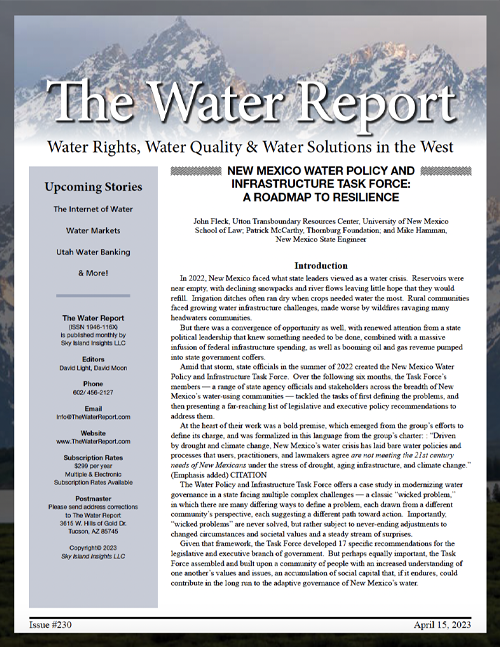
NM Water Policy & Infrastructure Task Force: A Roadmap to Resilience (published in The Water Report
Full Report
NM Water Policy & Infrastructure Task Force: A Roadmap to Resilience (published in The Water Report).
Full Report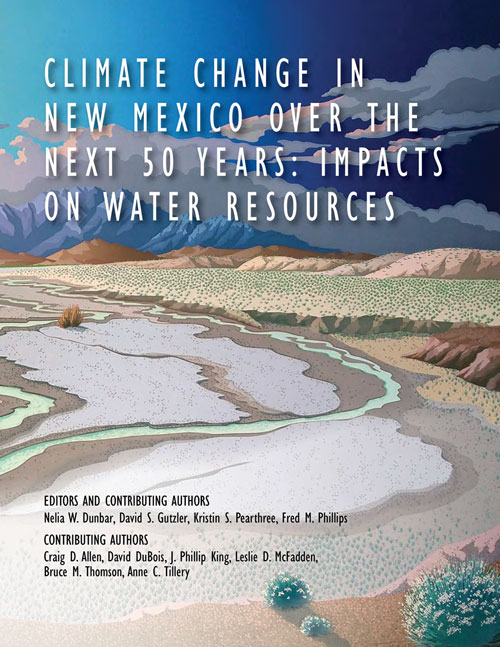
Climate Change in New Mexico Over the Next 50 Years: Impacts on Water Resources (Leap Ahead Report)
Full Report50 Year Water Action Plan
Action Plan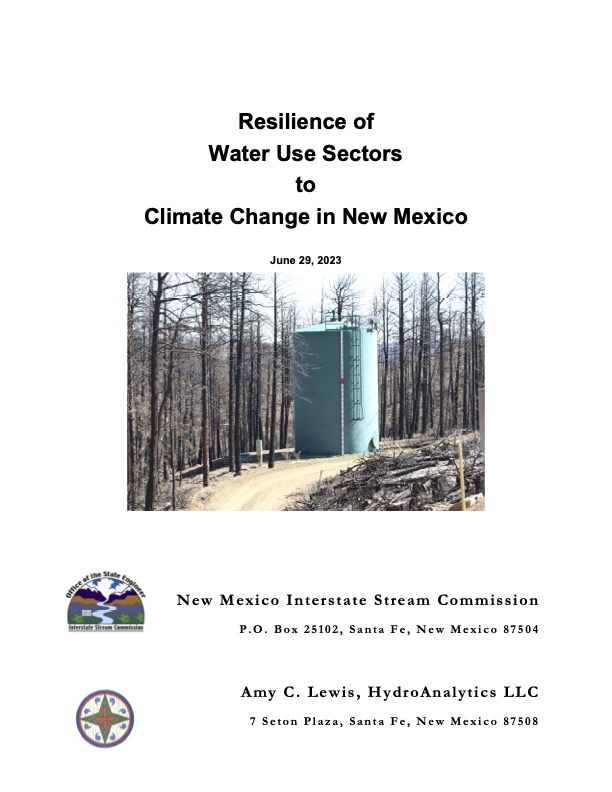
Resilience of water use sectors to climate change in New Mexico.
View Report
New Mexico Water Task Force Report - Facing New Mexico's 21st Century Water Challenges
View Report
Forest Action Plan
View Plan
Tribal Water Report. Prepared by Tribal Water Work Group.
View Report
Acequia Community Water Report: Prepared in Partnership with the 50 Year Water Plan
View Report
Clean Water Act 303(d)/305(b) Integrated Report
View Report
WATER QUALITY - STANDARDS FOR INTERSTATE AND INTRASTATE SURFACE WATERS
View Report
WATER QUALITY - GROUND AND SURFACE WATER PROTECTION
View Report
Water Quality Management Plan and Continuing Planning Process
View Report
Policy Spotlight: State-Funded Water Projects
View Report
NM Integrated Water Financing Plan (FINAL REPORT)
View Report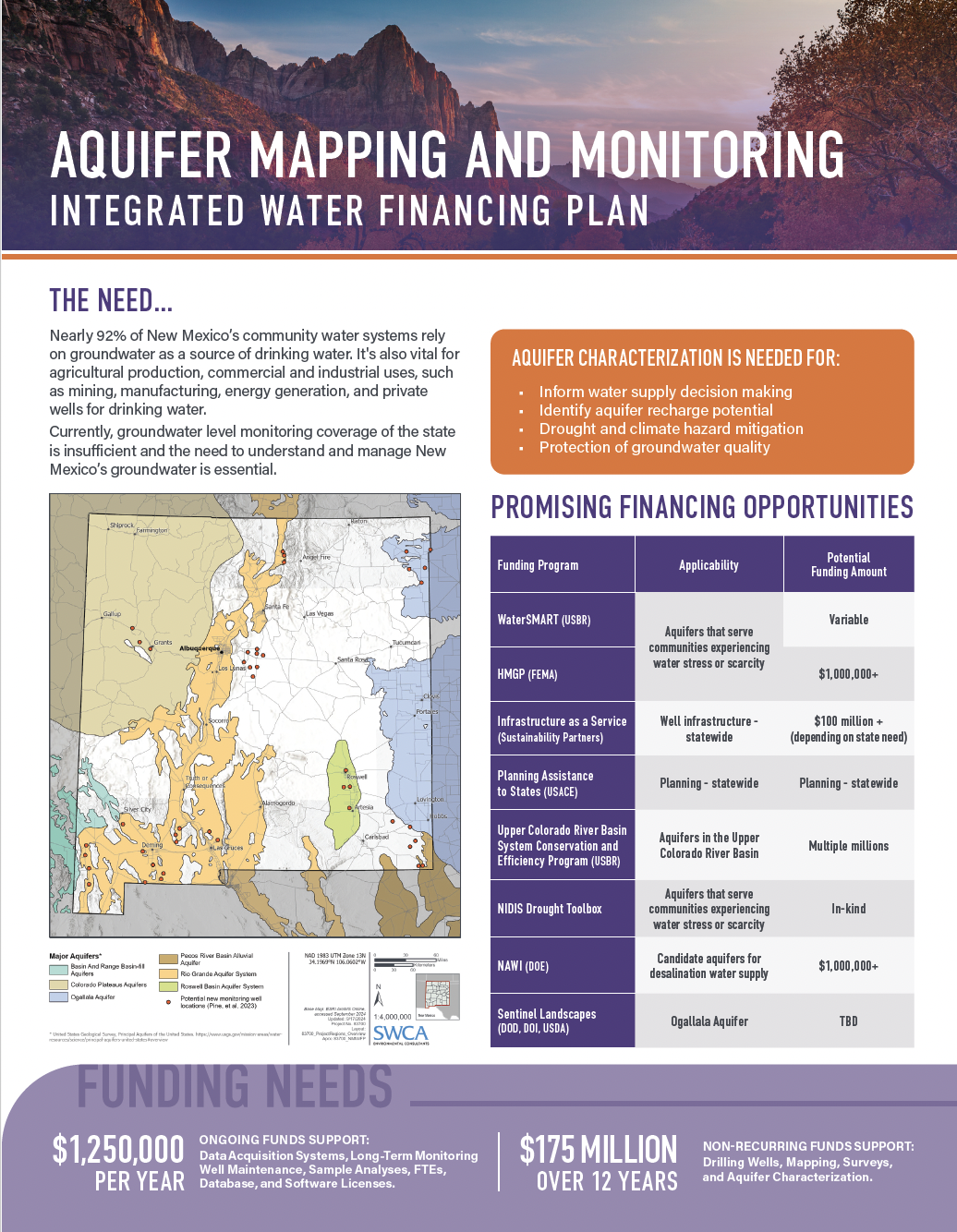
NMIWFP Aquifer Mapping
View Report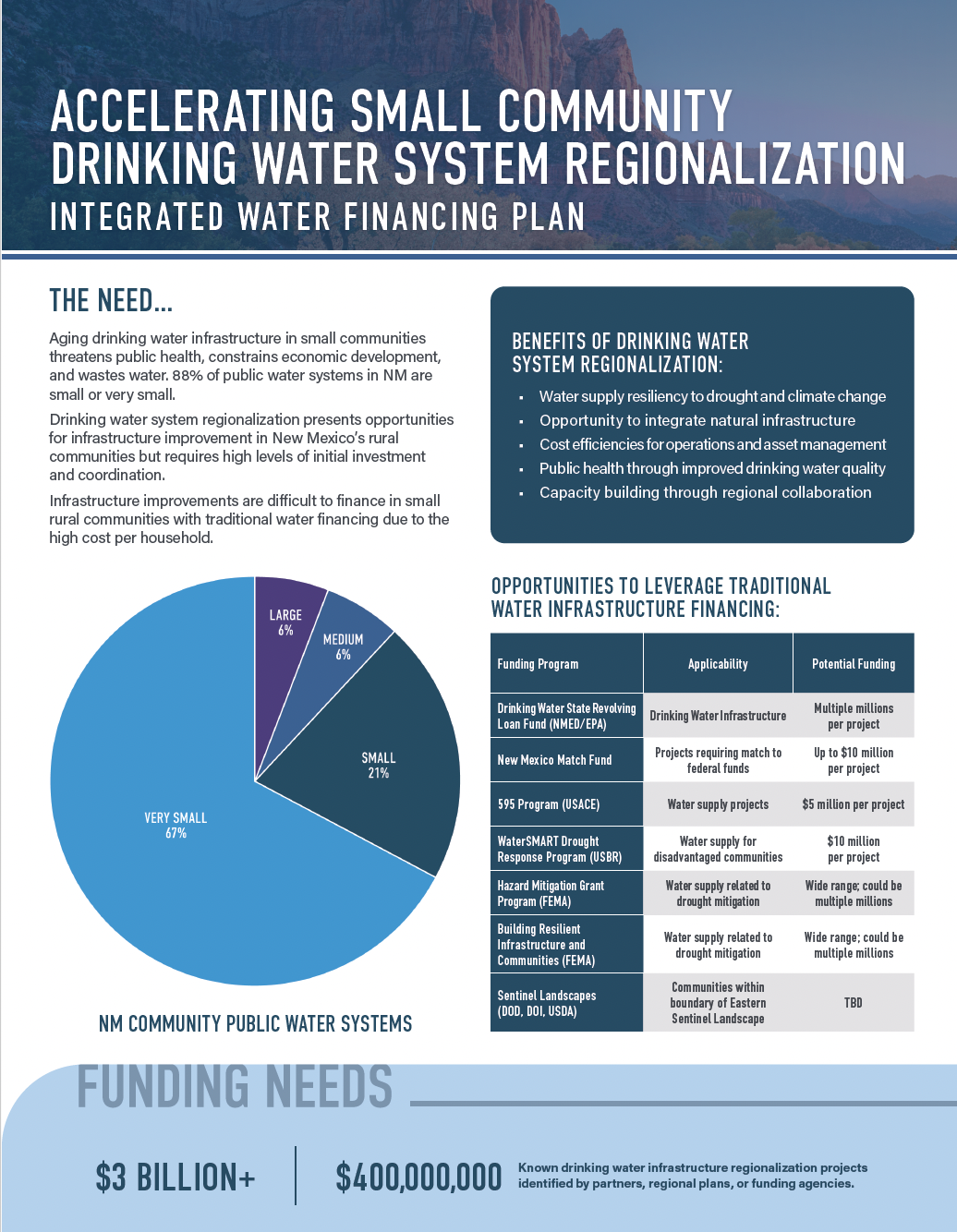
Accelerating Small Community Drinking Water System Regionalization
View Report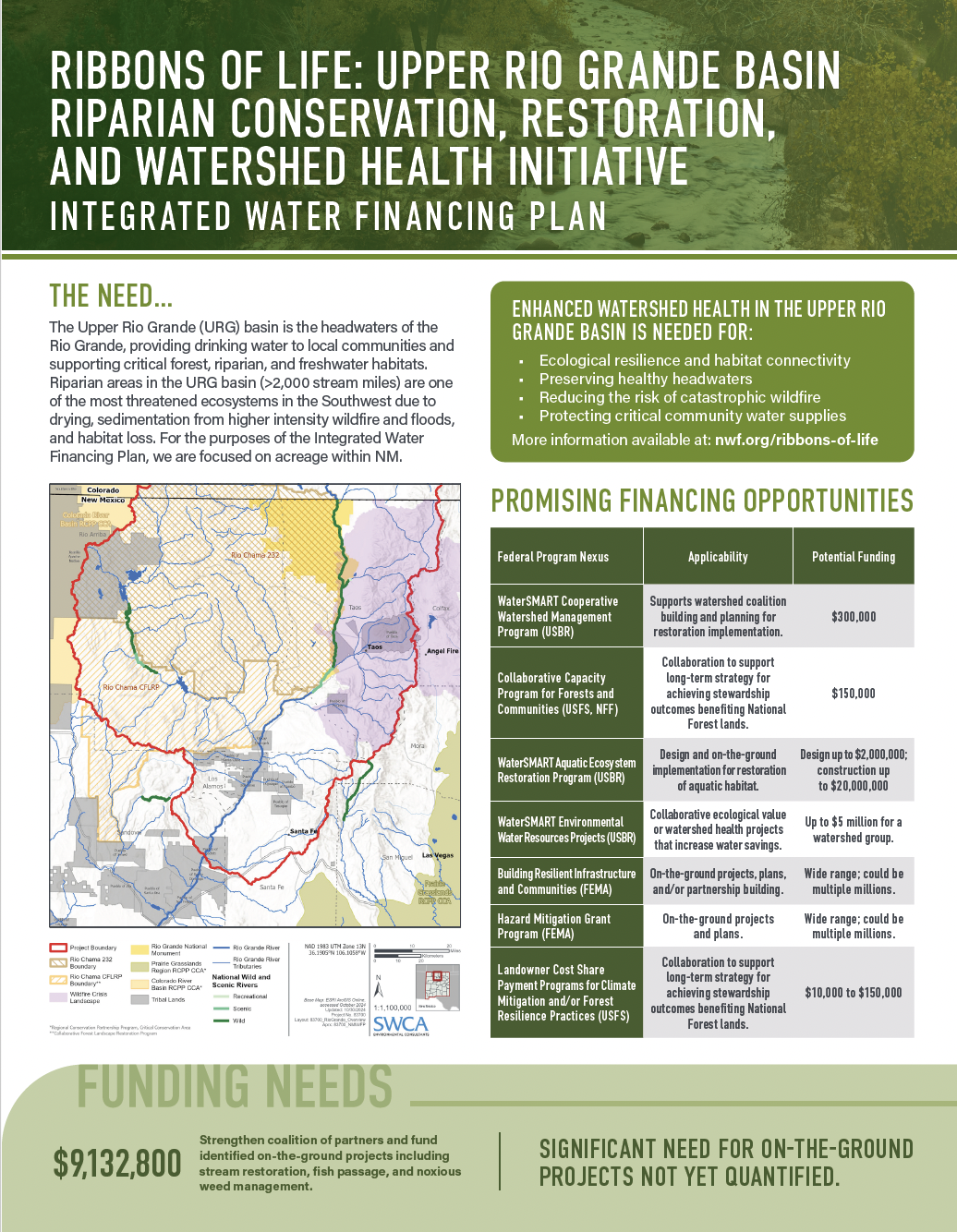
Ribbons of Life: Upper Rio Grande Basin Riparian Conservation, Restoration, and Watershed Health Initiative
View Report